Use the water amount printed on your Better Oats pouch, pour it into an extra large microwave-safe bowl, and follow that flavor's cooking time. The little measuring line is useful: these packets do not all take the same amount of water.
A bowl that comes out too loose or too thick is often a small preparation problem rather than a reason to give up on a flavor. The oat cut, portion, water, bowl, and microwave all affect the result. Start with the package method, pay attention to what happens, and make one change at a time. This guide takes you from an unopened packet to a bowl with the consistency you enjoy.
Read the pouch in your hand
Before reaching for the water, identify both the range and the flavor. Steel Cut Maple & Brown Sugar and 100 Calorie Maple & Brown Sugar sound similar, but their directions differ. One uses steel cut oats and a longer microwave time. The other uses rolled oats and a smaller dry portion. Remembering “the maple one” is not quite enough.
Use the directions on the box or packet you received when they differ from a guide or an older photo. Recipes and labels can change. Your package is also the best place to check cautions that apply to its preparation. Keep it on the counter while you cook the first serving, rather than throwing it away immediately after emptying the pouch. Once the bowl is finished, you can decide what worked.
There is no need to memorize all six methods. Learn the one you use most often and check the others when you switch flavors. If two people share the kitchen and prefer different packets, keeping both boxes within sight makes it easier to avoid carrying one person's method over to the other's breakfast. A little attention at this stage saves more effort than fixing a bowl afterward.
Water and microwave time by variety
| Variety | Cold water | Microwave on high |
|---|---|---|
| Steel Cut Original | 3/4 cup | 2 minutes 30 seconds |
| Steel Cut Maple & Brown Sugar | 3/4 cup | 2 minutes 30 seconds |
| Steel Cut Apples & Cinnamon | 1/2 cup | 2 minutes 30 seconds |
| 100 Calorie Maple & Brown Sugar | 2/3 cup | 90 seconds |
| 100 Calorie Cinnamon Roll | 2/3 cup | 90 seconds |
| 100 Calorie Apples & Cinnamon | 1/2 cup | 90 seconds |
The table is a convenient comparison, not a replacement for the label on your own box. It also explains why switching varieties can produce a surprise. Adding three-quarters of a cup to a pouch intended for half a cup is a meaningful change. Increasing the microwave time without noticing the extra water may then give you a hot bowl that still does not have the texture you expected.
Use cold water for the manufacturer's microwave method. Starting with already boiling water changes the starting temperature, so it is not the same procedure with a shortcut inserted. If you prefer a different preparation method, look for directions that explicitly support it on your package. “Instant” should not be read as permission to invent any water temperature, container, and timing combination and expect the same result.
Give the oats a larger bowl than they appear to need
The dry contents of a packet look modest. Once water and heat are involved, the mixture needs more room. Better Oats specifies an extra large microwave-safe bowl for these packet directions. Choose a bowl with generous space above the water and oats, not a small mug filled close to its rim. The extra capacity is working space during cooking, not a suggestion to increase the portion.
Check the bowl's own microwave suitability. Decorative metallic trim and containers that are not intended for microwave use do not belong in this method. A familiar bowl is convenient if you know its labeling and have room to handle it safely. Avoid choosing a container only because it looks good in a breakfast photo. Shape, capacity, and safe handling matter more when the contents are very hot.
A wide bowl can also make it easier to see and stir the mixture. Whatever shape you choose, place it securely on the microwave turntable and leave the appliance's operation unobstructed. If you need to carry the finished bowl to another room, prepare a heat-resistant place to set it down first. It is easier to move carefully when the destination is ready and you are not holding other things.
Use the pouch as a measure, then set it aside
Empty the entire contents into the bowl first. Open the empty pouch so you can see the fill line, then add cold water to that line and pour the water into the oats. The pouch is a measuring aid. It is not the vessel in which the oatmeal cooks. This distinction matters when you are making breakfast somewhere without your usual kitchen equipment, such as an office kitchenette.
Hold the pouch upright while checking the line. If you tilt it, the water level is harder to judge. Pour it steadily into the bowl and set the used pouch aside. If you prefer a measuring cup, use the amount specified for that variety and read the cup at an appropriate level. Either approach can work; the important part is giving the packet the amount of water its directions call for.
Do not assume that a household drinking mug is one measuring cup. Mug sizes vary considerably. Filling your favorite coffee mug halfway may be a convenient habit, but it does not tell you that you measured half a cup. When troubleshooting an inconsistent result, use the printed pouch line or a marked measuring cup. Once the water is measured reliably, other changes become easier to understand.
Stir before the microwave starts
After adding water, stir so the dry oats are moistened throughout the bowl. Pay attention to the bottom and edges, where a pocket of dry mix can hide. You are bringing the contents together rather than beating the mixture vigorously. A spoon is enough. This small step helps you begin with an even mixture and gives you a chance to check that all the packet's contents reached the bowl.
If you add a thick topping before cooking, it becomes harder to tell what the standard packet method produces. For the first bowl of a new flavor, keep the preparation simple and save additions for afterward. This is particularly useful with nut butter, yogurt, and large amounts of fruit. You can learn what the oats taste like and how they thicken before changing the mixture with other ingredients.
Clear the spoon from the bowl before putting it into the microwave. Set the stated time and remain nearby. Breakfast preparation may be quick, but it still involves heating food in a container that can become hot. If you notice the mixture rising toward the rim, stop the microwave safely rather than letting it spill. Reassess the bowl size before preparing the next packet.
Preparing a Steel Cut packet
For Steel Cut Original or Maple & Brown Sugar, begin with the package's three-quarters of a cup of cold water and two-minute-thirty-second microwave direction. For Steel Cut Apples & Cinnamon, the listed water amount is half a cup with the same starting time. Follow any additional directions on your own box, and use the extra large bowl.
When cooking finishes, remove the bowl carefully, stir again, and allow the oatmeal to cool to a comfortable eating temperature. Steel cut oats are intended to keep a recognizable texture. Do not assume that a noticeable bite means the bowl must become completely smooth. If you want a softer breakfast by preference, that may be a reason to choose the rolled-oat range next time rather than continually extending the cooking time.
Start with the label method before judging a particular microwave. If a bowl consistently needs an adjustment, keep a small note about the exact flavor, bowl, and water amount you used. A useful note might say that you prefer a small splash of water after cooking. “Cook longer” is less helpful if you did not record whether the first attempt used the correct amount of water.
Preparing a 100 Calorie packet
The 100 Calorie range starts with a shorter microwave time of ninety seconds. Maple & Brown Sugar and Cinnamon Roll use two-thirds of a cup of water in the current manufacturer directions. Apples & Cinnamon uses half a cup. Read the line on the empty pouch if you move between these flavors often.
Stir after heating and let the bowl cool before tasting. A rolled-oat bowl can look loose immediately when it comes out, then become thicker as it stands. Give it a brief chance to settle before making several changes. Otherwise, you may add more dry ingredients to fix a problem that would have resolved with a stir and a little time. The finished texture is the one to judge.
The range name describes the packet serving, so keep additions in mind if you are interested in the finished bowl's nutrition. Milk, yogurt, fruit, and nuts add their own nutrients and energy. That does not make them unsuitable toppings; it simply means the finished breakfast is different from the dry packet by itself. Add them because they suit your taste and the breakfast you want.
Adjust texture without losing track of the method
| What you notice | Check first | A useful next step |
|---|---|---|
| Too loose | Correct water amount and full cooking time | Stir and let the oats settle briefly before deciding |
| Too thick | Water measured accurately; no missing liquid | Stir in a small splash of water after cooking |
| Dry pockets | Whether the mixture was stirred before heating | Mix through the bottom and edges before the next cook |
| Boils over | Bowl capacity and fill level | Use the extra large microwave-safe bowl specified |
| Topping disappears | Whether it was stirred in while very hot | Keep part of the topping for the surface at serving |
Change one thing on the next attempt. If you alter the water, bowl, timing, and toppings together, you will not know which change mattered. A controlled approach does not require a formal experiment. It can be as simple as using the same bowl tomorrow and measuring the water carefully. Once the base is consistent, you can decide whether your preferred finish is thicker or looser.
When adding liquid to cooked oatmeal, start small and stir thoroughly. It is easier to add another splash than to remove liquid. Milk changes flavor and temperature as well as consistency, while water keeps the original flavor more intact. Choose the liquid according to what you want from the finished bowl. Avoid reheating repeatedly just to chase a very precise appearance while the oatmeal continues to thicken.
Add milk and toppings with a purpose
The packet directions here use water. If your package provides a milk method, follow it. Otherwise, a straightforward way to enjoy milk with the oats is to prepare the packet with water and add a little milk afterward. That lets you keep the cooking method consistent while adjusting the finish. A small amount can loosen the bowl and bring a different flavor without changing everything at once.
Yogurt works well as a finishing spoonful rather than something you must mix through the entire bowl. Put it on after cooking and let the contrast remain if you enjoy it. Nuts can go on last so they keep their crunch. Fruit can be sliced while the oats cool, provided you are not rushing around with the hot bowl in your hands. These are serving choices, not requirements.
For a new flavored packet, taste before adding sweet ingredients. Maple & Brown Sugar already has a defined flavor; Cinnamon Roll does too. You may enjoy either with nothing added. If you want variety, choose a contrasting texture or a small amount of fruit first. Our breakfast combinations explain how to build a topping around the flavor that is already there.
Cooking for two people
Two individual bowls are the simplest way to preserve the one-pouch directions when two people want breakfast. Each bowl receives its own measured water and its own packet method. It also gives each person control over the flavor and toppings. This is helpful when one person likes Steel Cut Original and the other prefers a 100 Calorie flavor. Their preparations are not identical, even if they share the table.
Do not assume that doubling the packet count means doubling the microwave time. More food changes the way the mixture heats, and a larger amount can require more space than expected. Unless your package provides directions for multiple pouches, individual preparation is a clearer starting point. Avoid packing two servings into a small container simply because the dry oats fit before you add water.
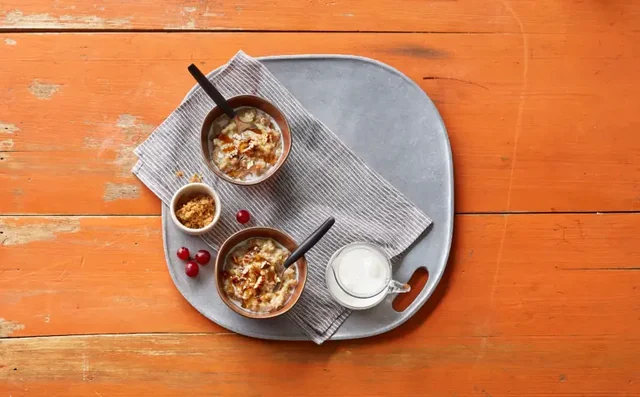
If you prepare bowls one after another, let each person handle the final toppings when their serving has cooled enough. Keep spoons and additions ready so the first bowl does not sit forgotten while you search for the second person's ingredients. A tray can help organize the cold ingredients, but carry hot bowls carefully and separately when that is the safer option in your kitchen.
Make the office version easy to repeat
A useful office breakfast kit is small: a labeled packet, a large microwave-safe bowl, a spoon, and access to clean water. Add a dry topping only if you want it. You do not need to bring a whole arrangement of jars to make the packet worthwhile. Keep the cooking directions with the oats, particularly if several flavors are mixed together in a drawer.
Shared microwaves can differ from the appliance you use at home. Begin with the package directions and watch the first bowl instead of assuming your home routine transfers perfectly. Leave the area clean if anything spills, and allow time for the food to cool before returning to a desk or meeting. The shortest printed cooking time is not the full time needed to prepare and eat breakfast comfortably.
Perishable additions need appropriate cold storage. Bring yogurt, milk, or cut fruit in a way that keeps them cold until you use them, rather than leaving them beside a dry packet for the morning. If refrigeration is inconvenient, select additions that suit your available storage and follow their labels. The oatmeal packet is only one part of the food you are bringing with you.
If breakfast gets interrupted
A single pouch is convenient because you can make the amount you intend to eat. If you do have cooked oatmeal left over, handle it as a perishable leftover. FoodSafety.gov advises refrigerating leftovers within two hours, or within one hour when the temperature is above 90°F. Use a suitable shallow container and a refrigerator at 40°F or below. Do not leave a prepared bowl on a desk all day.
General federal guidance is to use refrigerated leftovers within three to four days and reheat leftovers thoroughly to 165°F. Follow shorter limits for any added ingredients when applicable. If you are uncertain how long a bowl has been sitting out, do not rely on its smell or appearance to establish safety. A fresh packet is a more practical option than trying to rescue food whose storage history you do not know.
Stored oatmeal often needs a little liquid to loosen it when reheated. Stir carefully and check the temperature throughout, especially after microwave reheating. Keep nuts or other crisp toppings separate if you want them to remain crisp. Refrigeration is useful when needed, but preparing a fresh single packet may be simpler than planning several days of cooked portions from a product designed for quick individual bowls.
When a familiar packet meets a different microwave
A breakfast that works neatly in your kitchen may behave differently at a vacation rental or a new office. Before changing the food, check the basics: the appliance's controls, the bowl's suitability, and the packet's printed method. Make sure you selected the intended power setting rather than a leftover defrost program. A familiar time on the display is not helpful if the microwave is using a different setting.
Keep the first attempt simple. Use water measured to the packet's line, one pouch, and the required large bowl. Add the toppings after you have seen how the base turns out. This removes several possible explanations if the consistency surprises you. Stay nearby during cooking, and allow time to remove the hot bowl carefully. A new kitchen is not the best place to rush a routine you normally perform without thinking.
If you will use that microwave regularly, record your preference in terms of the specific packet and bowl. A useful note distinguishes a true preparation change from a finishing preference. Adding a small splash of milk at the table because you like a looser bowl is different from discovering that you accidentally used the water amount for another flavor. Correct a measuring error before deciding the appliance needs a new method.
Also pay attention to the bowl after cooking. A very hot container is not an invitation to hold it directly while stirring. Set it securely on a heat-resistant surface and use suitable protection to handle it. Let the food cool to a comfortable temperature before tasting. Once you have a reliable routine in the new setting, bring back your usual toppings one at a time rather than trying to change every detail on the first morning.
Finish the routine while it is still simple
Once breakfast is done, soak or rinse the bowl as its care instructions allow. Oats can cling firmly as they dry, so setting a little water in the bowl can make later washing easier. Clean the spoon and the preparation surface, and return any perishable toppings to the refrigerator promptly. These small habits keep the next morning's bowl from starting with yesterday's dishes.
Keep the box organized as you use it. If you transfer packets into a basket, leave the flavors visible and retain the directions. A different pouch appearing at the bottom of the basket should not become a guessing game. When you open a new box, check whether its label differs from the one you just finished. This is a sensible moment to read the ingredients and cooking method again.
If the base is right but breakfast feels repetitive, change the finish rather than the preparation. Switch from banana to pear, move a spoonful of yogurt to the side, or enjoy the oats plain alongside another dish. The reliable part of the routine can stay reliable. Use our range comparison when you want a different oat texture, and the collection when you are ready to choose another flavor.
Preparation references: the linked product pages summarize the manufacturer's variety-specific directions. Food storage guidance: FoodSafety.gov on prompt refrigeration and leftovers. Follow the directions and ingredient information on your own package.